
PRIME Funding Recipients
Hear from PRIME Award Recipients
Thinking of applying for PRIME funding? Hear directly from past award and grant recipients as they share their projects, experiences, advice, and the impact PRIME funding had on their work.
Applications for the 2026–2027 PRIME award cycle open August 4, 2026. Visit our Funding Opportunities page for details.
Applications for the 2026–2027 PRIME award cycle open August 4, 2026. Visit our Funding Opportunities page for details.
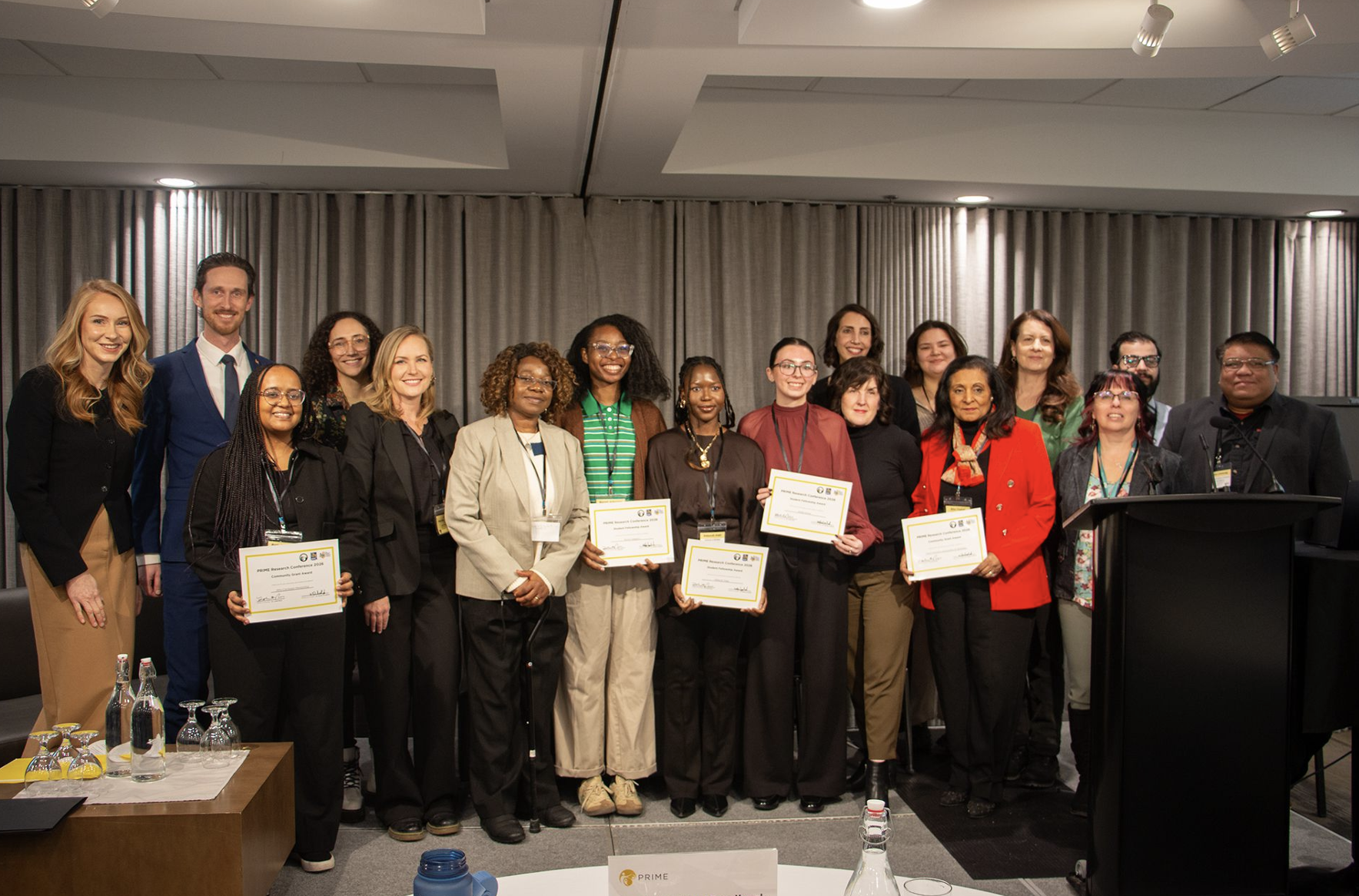
PRIME X Community Grant
Community Grant Recipients
2025-2026
-
Project: Hairstyling and Conversations
Award Accepted by: Bethel Alemaio
Faculty Partner: Dr. Warren Clarke
A community-embedded program strengthening culturally responsive mentorship and mental-health supports for Afro-Caribbean youth and families, emphasizing identity, belonging, and safe spaces for connection.
ACMP Mid-Year Check-In: The Afro-Caribbean Mentorship Program Inc. has made strong progress through its Hairstyles and Conversations program, hosting six community-engaged dialogue sessions with Black Winnipeg community members in Black-owned barbershops and salons. Sessions have explored topics such as mental health help-seeking, trauma, identity, healing, and rest as resistance. These gatherings have created meaningful spaces for Black men, boys, women, and girls to share experiences, listen to one another, and engage in respectful dialogue. The project has also supported student facilitation growth, with emerging facilitators gaining confidence and leadership experience. Over the next several months, the team will continue with additional sessions, interviews, focus groups, and knowledge-sharing activities.
-
Project: My Path Forward: A Youth-Led Indigenous Mental Health Promotion Initiative
Award Accepted by: Laurie McPherson
Faculty Partners: Dr. Mandy Archibald and Dr. Aleah Fontaine
A youth-led Indigenous mental-health promotion initiative (“My Path Forward”) using community-based participatory approaches and positioned for scalability through provincial and national networks.
CMHA Mid-Year Check-In: Canadian Mental Health Association Across Manitoba has focused on laying the groundwork for its youth mental health promotion project. The PRIME student intern has been gathering research on youth integrated services, Indigenous youth mental health promotion, and related areas, while the team has been meeting regularly with academic advisors. Planning work has included developing roles and responsibilities, drafting a project budget, identifying potential partner organizations, and preparing for future co-design sessions. Next steps include developing consent and recruitment materials, hosting pre co-design sessions with youth from urban, rural, and northern communities, and using those sessions to inform future program development.
-
Project: Understanding and Addressing Suicide and Suicide Ideation in Manitoba’s Newcomer Community
Award Accepted by: Krispin Ontong
Faculty Partner: Dr. Bolaji Akinyele-Akanbi
A newcomer-focused suicide prevention initiative addressing urgent gaps in culturally safe supports for immigrant youth and families, led by a highly capable community team.
SPCW/IMP Mid-Year Check-In: Social Planning Council of Winnipeg—Immigration Partnership Winnipeg has completed much of the project start-up and preparation work for its community-engaged research project. The academic partner has submitted the research ethics application, and the team has onboarded a Research Associate to support research design, participant engagement, and data collection preparation. Draft surveys, focus group guides, recruitment posters, and informational materials have also been developed for youth, parents and caregivers, and mental health service providers. Although formal recruitment has not yet begun due to the ethics review process, early outreach to ethnocultural organizations and community networks has generated strong interest. Once ethics approval is received, the team plans to move quickly into recruitment, data collection, analysis, validation, reporting, and policy engagement.
-
Project: The Co-Development and Pilot Evaluation of Community-
Based Perinatal Depression Peer Support ProgrammingAward Accepted by: Rita Chahal
Faculty Partner: Dr. Kristen Reynolds
A co-developed peer-coaching program for maternal depression to pilot integrating evidence-informed strategies with clinician leadership to expand accessible family mental-health supports across Manitoba.
MOOD Mid-Year Check-In: Mood Disorders Association of Manitoba is still in the early stages of project development. While the project has not formally started, the team has begun reviewing and sharing previous MDAM research with the broader project team. Community interest remains strong, and several students are currently working in this area. Key challenges so far include staffing and finalizing the long-term project timeline. The team hopes to meet in person with the research team and MDAM support staff to coordinate logistics, with plans to begin focus groups in late September or early November and work toward an interim report for funders in early January.
-
Project: Understanding the Mental Health Impact of Settlement Service Cuts on Refugees and Newcomers in Manitoba
Award Accepted by:Damhat Zagros
Faculty Partner: Dr. Michael Baffoe
A community-driven project examining settlement-related mental-health consequences of changing immigration policies among newcomer families, with strong organizational partnerships and significant in-kind contributions
supporting feasibility.Resilia Mid-Year Check In: Resilia Community Wellness Centre has made significant progress in strengthening partnerships, refining the research design, and preparing for community-based data collection. The project has established academic partnerships with the Faculty of Social Work at the University of Manitoba, developed recruitment pathways through schools, settlement agencies, ethnocultural organizations, and Resilia programs, and completed research questionnaires and consent forms. The first youth focus group has already taken place with newcomer youth who accessed settlement services before funding cuts, with additional interviews and focus groups planned with youth, parents, and frontline service providers. The project continues to highlight the connection between settlement supports, mental health, and newcomer well-being, while creating space for newcomer youth and families to shape future policy and service recommendations.
-
Project: Collaborating to Improve Mental Wellness Care for First Nations Families
Award Accepted by: Kerri Nickel & Alannah Woodhouse
Faculty Partner: Dr. Leslie Roos
A culturally grounded family-child lands-based mental wellness project led by community health representatives, with strong feasibility and direct alignment with Indigenous wellness priorities and equity commitments.
PFN Mid-Year Check-In: Pinaymootang Health Centre—Maternal Child Health Program has been preparing for a community engagement session focused on mental health, wellness, and land-based knowledge. Planning has included family, professional partner, and Elder invitations, facilitator bookings, staff engagement, and event preparation. The team plans to invite 103 on-reserve families connected to the Maternal Child Health Program, as well as other community members through a community poster. Early successes include securing Indigenous facilitators with existing community relationships, connecting with accessible mental health supports, and hiring local community members, including a photographer and videographer. The team’s next priority is to host the event successfully in partnership with PRIME community programs and facilitators.
Student Fellowship Recipients
2025-2026
-
YCMA Partnership
Shelby is an Honours undergraduate student in Psychology and Criminal Justice at the University of Winnipeg. Her academic interests focus on mental health, trauma, and the intersections between psychology and the criminal justice system.
Through this opportunity, she is looking forward to gaining hands-on experience learning from organizations that support mental health and well-being in our community while continuing to pursue her goal of graduate studies in clinical psychology.
-
Resilia Community Wellness Centre Partnership
Deborah is a final-year BA Psychology Honours student passionate about the intersection of mental health and social policy. Her work explores trauma and grief while examining how policy shapes the experiences of marginalized and newcomer communities.
Beyond research, Deborah is an art enthusiast and emerging curator who values collaborative creative work. She applied to the PRIME x Community Student Fellowship to deepen her community-based research and connect academic knowledge with real-world needs.
-
Immigration Partnership Winnipeg
Bunmi Adeyemi is in her final year of the Interdisciplinary Health Sciences Program. She is driven by a passion for understanding neurodevelopmental disorders and their societal impact.
She plans to pursue a master’s in Global Health to explore the interplay of biology, environment, and policy in shaping neurological health and to create meaningful interventions for underserved communities.
-
Canadian Mental Health Association Partnership
Marika is a proud member of Bunibonibee Cree Nation. She has Indigenous ancestry through three other communities: Métis ancestry from St. Clement’s, Inuit ancestry from Rankin Inlet, and Ojibwe ancestry from Eagle Lake through her late Grandma, a residential school survivor and parent of the sixties scoop, Marilyn Nabish.
“Owning, promoting, celebrating and amplifying Indigeneity while navigating academia is always a top priority to me because me and people like me have only been allowed to seize opportunities like this very recently. I am so happy to be here and work with the CMHA!”
PRIME Trainee Research Award
Trainee Awards Recipients
2025-2026
-
Project: Mino Ombigia Awasodaa — “Let’s Raise Them Well Together”
Sandra Hunter is in the process of completing her PhD in Clinical Psychology at the University of Manitoba. She is Anishinaabe on her mothers side, and Scottish, Irish, and English on her fathers side. Sandra grew up in Dauphin River First Nation and is a member of Lake St. Martin First Nation in the Interlake region of Manitoba. Sandra is a mother and grandmother and worked as a Families First Home Visitor for 14 years. She returned to university to explore Indigenous created and led methods of supporting Indigenous families.
Sandra's research focuses on traditional Indigenous child rearing and reclamation of culture to increase wellness and positive cultural identity. Sandra will be using the PRIME award to complete a needs assessment and pilot intervention with Indigenous families.
Amount: $5,000
-
Project: From Research to Practice: Exploring the Impacts, Needs, and Readiness for Implementing Peer Support Interventions for Parents of Young Children
Kaeley is a PhD candidate in Clinical Psychology at the University of Manitoba, working under the research supervision of Dr. Leslie Roos and Dr. Kristin Reynolds. She has a background in both research and clinical work focused on children, parents, and families. Kaeley has a particular interest in mental health, parenting support, and the development and evaluation of intervention programming.
For her dissertation research, Kaeley is examining the role of peer support in mental health and parenting programming. She is using both quantitative and qualitative methods to explore what works best within peer support models and how these programs can be effectively designed, developed, and implemented. The goal is to identify scalable approaches to peer support that can increase access to care and help more parents and families receive the support they need to improve overall family wellness.
Amount: $3,500
-
Project: Métis Families’ Perspectives on Mental Health Service Accessibility in Northern Manitoba
Morgan Hanson-Oliveira is a first-year Master’s student in the Clinical Psychology program at the University of Manitoba. She is of Red River Métis and Portuguese descent and was raised in Thompson, Manitoba. Her research focuses on improving access to mental healthcare in northern, rural, and remote communities, with a particular interest in Indigenous youth and family mental health, as well as community-based approaches to mental health support.
Building on her Honours thesis, Morgan’s research explores how personal and cultural values shape Red River Métis families’ access to mental health services in Northern Manitoba. Through qualitative narrative analysis, her study will highlight stories of strength and resilience, emphasizing the importance of cultural identity in care. The aim of this project is to provide suggestions for improving existing programs and to inform the development of more culturally responsive resources for Métis families.
Amount: $3,000
-
Project: An Exploration of How Experiences of Motherhood Shape HIV Prevention and Treatment Adherence in a Sample of Siloam Mission Clients
Adi Keynan is an honours Psychology student at the University of Winnipeg. She is passionate about research and knowledge translation, with a focus on turning findings into practical, community-driven outcomes. Adi’s background includes psychology (e.g., substance use, schizophrenia, emotion regulation) and related fields such as criminal justice. She is honoured to be a recipient of the 2025 PRIME Trainee Award and is deeply grateful for the opportunity to continue exploring research in areas that are both personally meaningful and highly relevant to the ongoing HIV epidemic in Manitoba.
Receiving the 2025 PRIME Trainee Award is instrumental in supporting Adi’s research under the supervision of Drs. Bev Fredborg and Zulma Rueda, in partnership with the Alltogether4IDEAS research group. The funding from this award will directly support participants by covering their compensation and transportation expenses, while also contributing to research assistant salaries. This study will explore how experiences of motherhood influence HIV prevention and treatment adherence among clients of Siloam Mission. By centring the voices of mothers living with HIV, Adi aims to identify their primary needs and uncover ways to reduce barriers to care for them and their families.
Amount: $2,500
-
Project: Perinatal Mental Health Needs of Indian Immigrant Women: Exploring the Accessibility and Acceptability of Mental Health Supports
Bhavya is a Master’s student in the Clinical Psychology program here at the University of Manitoba. She is passionate about promoting culturally inclusive mental health care, as well as engaging in community-based research and advocacy. Bhavya is deeply grateful to be one of the recipients of the 2025 PRIME Trainee Award. Funding from this award will support her master’s thesis, which aims to broaden our understanding of how Indian immigrant women label and conceptualize their mental health challenges during the perinatal period. The project will also explore unmet mental health needs within this group, with the goal of informing future program development and culturally responsive supports.
Amount: $1,000
-
Project: Minoayawin — Wellness for Everyone: First Nations Priorities Regarding Mental Health and Substance Use Services in Manitoba
Malcolm Disbrowe is a MSc student in the Department of Community Health Sciences at the University of Manitoba, supervised by Dr. Andrew Hatala. He recently completed a BA (Honours) in Psychology, also at the University of Manitoba. His research focuses on Indigenous Peoples’ health across the lifespan, substance use disorders, and Indigenous research methodologies. Malcolm’s work is rooted in community-based and decolonizing approaches, aiming to address pressing social issues, such as substance use–related mortality, through collaborative, multi-sector solutions. He has been honoured to receive multiple national and institutional awards recognizing his academic excellence, leadership, and contributions to Indigenous health research. Committed to bridging research and practice, Malcolm’s projects engage Indigenous communities to co-create knowledge that informs culturally grounded, sustainable health services.
Malcolm is advancing the project Minoayawin-Wellness for Everyone: First Nations Priorities Regarding Mental Health and Substance Use Services in Manitoba with support from the PRIME Trainee Research Award. This project seeks to identify and map services accessible to First Nations Peoples across the province and to engage with community stakeholders to understand their priorities for improving these services. PRIME funding will directly support the second phase of the project, including respectful engagement with stakeholders, participant honoraria, co-analysis with participants, community meetings, and the creation of accessible knowledge translation materials. These activities will ensure the project remains culturally grounded, community-led, and aligned with First Nations values. The findings will generate actionable recommendations for developing culturally safe, First Nations–centred mental health and substance use services in Manitoba. Ultimately, this work will contribute to closing service gaps, strengthening family and community wellness, and advancing the Truth and Reconciliation Commission’s Calls to Action (specifically Call 19).
Amount: $5,000
2024-2025
-
Maawandoonan - Collaborative Reimagination: Indigenizing and Decolonizing Mental Health Care in Manitoba
Sydney Levasseur-Puhach’s PRIME Trainee Award project was on Indigenizingand Decolonizing Mental Healthcare in Manitoba. Her research aimed to build knowledge surrounding experiences of Indigenous mothers, and their motivations and suggestions for improvement in mental health and wellness programs. Analyzing data from interviews with Métis and Anishinaabe mothers highlighted the need for increased attention to culturally specific and appropriate treatments and interventions to support the mental health of Indigenous mothers and families in Manitoba.
Telling Stories of Resistance – Calling to Ancestral Strength: An Exploration of Mental Health.pdf
-
Engaging People with Chronic Pelvic Pain: The Need to Understand Experiences
Updates:
Recruited 2 patient partners
Development of needs assessment underway
Next Steps:
Finalize needs assessment in collaboration with patient partners
Distribute needs assessment nationally
-
Recognizing and Responding to Birth Trauma: The Development and Pilot Evaluation of a Brief Online Training Intervention for Canadian Health Care Providers
Shayna Pierce’s PRIME Trainee Award was used to support the web design ofthe Birth Trauma Training Program in partnership with the Centre for Healthcare Innovation. Preventing the harmful impacts of traumatic childbirth experiences is key to improving the health of both mother and child, and by developing training materials to support this, with responses from doctors, nurses and midwives, we can increase our recognition and response to birth trauma.
-
Tulong sa Pamilyang Pinoy: The Co-Development and Evaluation of a Single-Session Intervention Supporting Filipino Parent Mental Health
Nicole Tongol’s PRIME Trainee Award was used to support the development of her research on Supporting Filipino Family Mental Wellbeing in Manitoba. Her research aims to explore the mental health needs of Filipino parents with young children using Sikolohiyang Pilipino methodology, and to investigate any barriers to service access. The goals of this research are to identify and describe the critical need for inclusive and accessible services that promote equity in family wellness for the Filipino population. Long-term goals of this research are to reduce disparities in Filipino family mental wellness through the co-development of culturally specific resources.